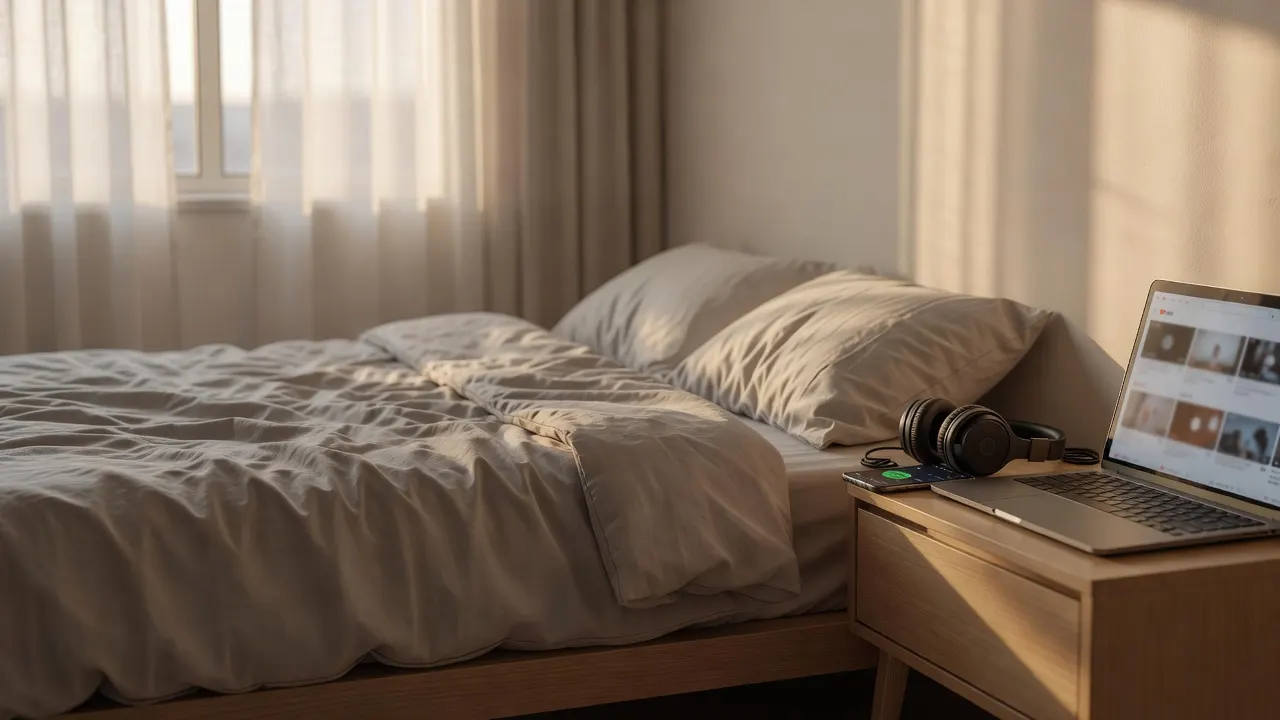
Many individuals struggle to achieve restful sleep, often because they underestimate how environmental sounds affect sleep quality. This guide offers practical advice on choosing the perfect sleep sounds to enhance your eight-hour slumber. By personalizing your sleep soundscapes, you can significantly improve your sleep quality.
We explore the factors that influence sleep sound selection, from environmental noise levels to individual preferences. With tailored tips for integrating these sounds into your bedtime routine and monitoring their impact, you will discover how to create a conducive environment for restful 8-hour nights.
Understanding the Role of Sleep Sounds
Sleep sounds can significantly enhance sleep quality by creating a soothing environment that masks disruptive noises.
How Sleep Sounds Improve Sleep Quality?
Personalizing Sleep Sounds
The choice of sleep sounds should be tailored to personal preference and specific needs. Some may find white noise soothing, while others might prefer nature sounds or electronic music.
Teaching Babies to Sleep Through Noise
The NHS advises that teaching a baby to sleep through certain amounts of noise can be beneficial, highlighting the concept that strategically selected sleep sounds can be part of a healthy sleep routine. For more information on helping your baby sleep, visit NHS guidance on helping your baby to sleep.
Optimizing Your Sleeping Experience
Personalizing sleep sounds involves considering your sleep environment and noises that disrupt your rest. Using curated playlists on platforms like YouTube and Spotify can help users experiment with different sounds to find the best option for them.
Final Thoughts
Sleep sounds play a significant role in creating a personalized noise environment that minimizes disruptions and promotes relaxation, ultimately enhancing sleep quality.
Personalizing Sleep Sounds for 8-Hour Sleep
Tailoring sleep sounds to your individual sleep cycle can significantly enhance the effectiveness of restful sleep. Incorporating natural sounds, such as waves crashing against the shore or gentle rain, can create a calming atmosphere conducive to sleep. Sounds like birdsong are also known to promote relaxation.
White noise and pink noise are popular choices for many individuals seeking 8-hour sleep. White noise combines various frequencies at equal intensity, while pink noise has lower frequencies than white noise, which some find more soothing. For information on optimizing sleep, visit Cambridge Dictionary's definition of optimizing.
The choice of sleep sound should align with your personal preferences and the environment in which you sleep. If you live in a noisy city, a sound machine or app producing white or pink noise might be beneficial. For those who prefer natural sounds, apps or streaming services can provide a variety of options.
Experimenting with different sounds is key to finding what works best for your sleep environment and personal relaxation preferences. Additionally, consider the duration of the sound track; some may prefer continuous noise throughout the night, while others might benefit from shorter intervals that allow for more refreshed wake-ups.
Selecting Ideal 8-Hour Sleep Sounds on YouTube and Spotify
Listeners can benefit from the vast array of soundscapes available on YouTube and Spotify, tailored to various preferences. These platforms offer curated playlists or lists that provide easy access to sleep-inducing audio for an extended period.
To maximize the effectiveness of these sleep sounds, consider starting with genre-specific playlists such as "Relaxing Nature Sounds," "Lullabies and Sleep Tunes," or "Ambient Electronic Music." YouTube's "Deep Sleep" playlist or Spotify's "Relaxing Beats for Sleep" might offer a mix of instrumental tracks, nature sounds, and white noise suitable for an 8-hour sleep cycle. For more information on relaxation playlists, visit Calming Music Relaxation's guide to Spotify relaxation playlists.
Spotify also uses your listening history to personalize recommendations. If you have been listening to calming music or sleep soundscapes, Spotify may suggest similar tracks as part of its "Discover Weekly" feature or "Your Daily Mixes." For more information on Spotify's personalization features, visit Spotify's Discover Weekly feature.
Many apps offer sleep timer functionality, allowing you to set a specific duration for your sleep sounds. This ensures that the music will stop playing after 8 hours, helping to create an uninterrupted sleep environment.
In summary, when selecting ideal 8-hour sleep sounds on YouTube and Spotify, take advantage of curated playlists, personalized recommendations, and consider the genre and tempo of the music to optimize your sleep experience.
Factors to Consider When Choosing Sleep Sounds
When selecting sleep sounds for optimal restful sleep, it is important to consider several factors that can enhance or detract from your night's quality. The volume and tempo of the sounds are key considerations to avoid waking due to sudden changes or loud noises. For instance, a gradual increase in sound level or maintaining a consistent tempo can help ensure a peaceful night.
The duration of the soundscape is also important. Some listeners prefer continuous play for the full 8 hours, which helps create a constant background noise that can mask external disturbances and promote deeper sleep. However, it's essential to match this duration with your own sleep pattern and preferences, as some may find longer periods of continuous sound relaxing while others might benefit from intermittent breaks.
To prevent monotony and maintain interest throughout the night, incorporating a mix of sounds is advisable. This variety can include nature sounds like waves crashing on the shore or birds chirping at dawn, white noise such as static or fan sounds, or even ambient music with soothing melodies. A balanced mix ensures that your brain remains engaged without being over-stimulated.
Lastly, personalization is key. Just as sleep needs can vary greatly from person to person, so too can preferences for sleep sounds. Experimenting with different types of sounds and adjusting the volume and timing according to what feels most restorative to you is part of the personalized approach to selecting ideal 8-hour sleep sounds.
Integrating Sleep Sounds into Your Routine
Integrating sleep sounds into your bedtime routine can significantly enhance the quality of rest during your sleep cycle. One effective method is to establish a pre-sleep ritual that signals to your body it's time to wind down, which may include playing sleep sounds along with relaxation techniques like meditation or deep breathing exercises.
Maintaining consistency in your sleep environment is important for this enhancement. This involves keeping the bedroom quiet, dark, and cool, as well as ensuring that the use of sleep sounds becomes a regular part of your bedtime routine. Consistency can help your body associate these sounds with relaxation and rest.
Understanding and adapting to your baby's sleep patterns is also important if applicable. The NHS advises that some babies have varying sleep needs, so it's essential to create a conducive environment for rest without being overly concerned with silence. For more information on helping your baby sleep, visit NHS guidance on sleep and tiredness after having a baby.
Sharing the responsibility of nighttime care can alleviate stress and improve sleep quality for both parents. If you have a partner or family members, coordinating tasks like night feeds or soothing the baby back to sleep can provide much-needed rest.
In summary, enhancing your sleep by integrating sleep sounds involves creating a calming environment, using relaxation techniques, and maintaining consistency in your routine. This multi-faceted approach can lead to improved sleep quality and a more rejuvenating eight-hour sleep period.
Monitoring Sleep Quality and Adjusting as Needed
Regularly assessing the impact of sleep sounds on your sleep quality is important for achieving restful nights. If you find that the chosen sleep sounds are not conducive to a peaceful sleep, it's important to adjust them accordingly.
How to Monitor Sleep Quality
Monitoring sleep quality can be achieved through both subjective measures and objective data if available. Subjectively, you might notice improvements in how rested you feel upon waking, your ability to concentrate during the day, and a decrease in overall fatigue.
Objective Data
Objective data, such as using sleep tracking devices or apps to monitor sleep duration and patterns, can provide insights into the effectiveness of sleep sounds. For more information on sleep tracking, visit NHS advice on fighting fatigue.
Persistent Sleep Issues
In cases where sleep issues persist despite using sleep sounds, it is advisable to consult with a healthcare professional. This might be particularly relevant if you experience chronic tiredness that affects your daily life.
Baby's Sleep Patterns
For those with babies, understanding their unique sleep patterns is essential. It's important to recognize that a baby's waking and sleeping schedule will evolve over time, and parents should adapt their approach to help better sleep for both the child and themselves.
Summary
In summary, monitoring your sleep quality is key to optimizing the benefits of sleep sounds. If adjustments are necessary, consider changing the sound type or volume, and if persistent issues arise, consult with a healthcare professional for guidance tailored to your individual needs.
Your Next Steps
- Experiment with different sleep sounds libraries on both YouTube and Spotify.
- Curate a playlist tailored specifically for your 8-hour sleep cycle, adjusting volumes and tracks for optimal rest.
- Keep a sleep diary to monitor the impact of various sleep sounds on your sleep quality.
- Regularly review and update your sleep sound selection based on what promotes the most restful sleep.
- Incorporate relaxation techniques or meditation alongside sleep sounds for an enhanced sleep experience.
Sources
- www.nhs.uk/baby/caring-for-a-newborn/helping-your-baby-to-sleep
- dictionary.cambridge.org/dictionary/english/optimizing
- calmingmusicrelaxation.com/guides/spotify-relaxation-playlists.html
- www.nhs.uk/baby/support-and-services/sleep-and-tiredness-after-having-a-baby
- www.nhs.uk/live-well/sleep-and-tiredness/self-help-tips-to-fight-fatigue
Facts and links checked on 25 October 2026. Summarises the sources linked above; check the linked source for the latest version.
How we researched this: we compiled this guide from the official and independent sources listed above, and checked the facts on the date shown. Our editorial policy explains how we choose and check sources.